What Is the Customer Object in CRM? (And Why It Matters More Than You Think)
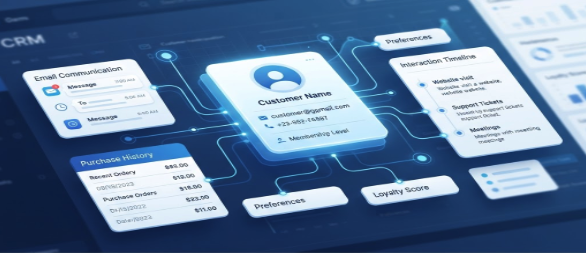
The Hidden Foundation of Every CRM: The Customer Object
If you've ever opened a CRM and wondered why some businesses get transformative results while others just end up with a glorified spreadsheet, the answer almost always comes back to one thing: how well they understand and use the Customer object.
It sounds technical. It isn't. At its core, the Customer object is simply the structured record your CRM uses to store everything it knows about a person or company you do business with. But get it right, and it becomes the beating heart of your entire revenue operation. Get it wrong, and you're flying blind.
This guide breaks down exactly what the Customer object is, how it works across popular CRM platforms, what fields actually matter, and — most importantly — how to use it to genuinely improve your customer relationships rather than just track them.
What Is a Customer Object in CRM?
In CRM terminology, an object is a category of data — a structured template that holds a specific type of information. Think of it like a database table with rows (individual records) and columns (fields). The Customer object (sometimes called the Contact object or Account object depending on the platform) is the record that represents a real human being or organization in your system.
Every interaction, purchase, support ticket, email, and deal your team handles is ultimately connected back to this object. It is the anchor point of your CRM.
Customer Object vs. Contact vs. Account: What's the Difference?
This is where most people get confused, especially when switching between platforms. Here's a quick breakdown:
Contact object: Represents an individual person — a human with a name, email, phone number, and role.
Account object: Represents a company or organization. In B2B CRMs, multiple Contacts belong to one Account.
Customer object: Either a unified record (in simpler or B2C CRMs) or a conceptual label applied to Contacts/Accounts that have actually purchased from you — as opposed to leads or prospects.
In platforms like Salesforce, HubSpot, and Attio, the distinction between these objects is explicit and structural. In simpler tools, they may be collapsed into a single record. Understanding which model your CRM uses is the first step to using it well. If you're still getting oriented, our complete CRM overview is a great place to start.
The Core Fields That Make a Customer Object Powerful
Not all Customer objects are created equal. The fields you choose to track — and the discipline with which you keep them updated — determine whether your CRM is a strategic asset or a data graveyard.
Essential Fields Every Customer Object Needs
Full name and job title — Who are you actually talking to?
Email and phone — The basics, but they must be verified and current.
Company and industry — Critical for segmentation and personalization.
Lead source — Where did this person come from? This feeds your marketing attribution.
Lifecycle stage — Lead, prospect, customer, churned? This single field drives automation rules.
Owner — Which rep or team member is responsible for this relationship?
Last activity date — A simple field that reveals relationship health at a glance.
Advanced Fields That Separate Good CRMs from Great Ones
Customer health score — A calculated field combining engagement, purchase history, and support activity.
Segment or persona tag — Enables targeted campaigns without manual filtering.
Preferred communication channel — Email, phone, SMS, or social? Meeting customers where they are drives response rates up significantly.
NPS or satisfaction score — Pulled from surveys directly into the record for context before every interaction.
Revenue to date — Connects the Customer object to deal and invoice data so reps always know the account's value.
A well-structured Customer object turns every team member — sales, support, marketing — into a knowledgeable partner rather than a stranger repeating the same questions. That alone is one of the most underrated ways to improve customer experience via CRM.
How the Customer Object Connects to the Rest of Your CRM
The Customer object does not live in isolation. Its real power comes from the relationships it holds with other objects in the system. This is what makes a CRM fundamentally different from a contact list in a spreadsheet.
Key Relationships to Configure
Deals / Opportunities: Every open or closed deal is linked to a Customer record. This gives you a full revenue history without any manual cross-referencing.
Activities: Calls, emails, meetings, and tasks attach to the Customer object, creating a chronological relationship timeline any team member can read in seconds.
Tickets / Cases: Support interactions connect here too, so sales reps can see if a customer is mid-complaint before making an upsell call — an embarrassing miss that ruins trust.
Marketing engagement: Email opens, link clicks, form submissions, and campaign responses feed back into the Customer record, enriching the picture continuously.
When these relationships are properly configured, your CRM stops being a filing cabinet and starts behaving more like institutional memory for your entire business. The benefits compound over time — the longer you maintain clean, connected Customer objects, the more valuable your data becomes.
Common Mistakes That Break the Customer Object (And How to Fix Them)
Most CRM failures are not software failures. They are data architecture failures. Here are the mistakes that quietly destroy the value of your Customer object:
1. Duplicate Records
When the same customer exists as multiple records — one from a web form, one manually entered by a rep, one imported from a spreadsheet — your system loses coherence. Automations fire twice, reps get confused, and reporting becomes unreliable. Fix: Enable duplicate detection rules and run a deduplication audit at least quarterly.
2. Missing Lifecycle Stages
If every record has the same lifecycle stage — or none at all — you cannot segment, automate, or report meaningfully. Fix: Define your stages clearly (subscriber → lead → MQL → SQL → customer → advocate) and use automation to update them based on actions, not manual entry.
3. Stale Data
A Customer object with an email address from 2021 and no activity logged since then is worse than no record at all — it creates false confidence. Fix: Set up re-engagement workflows that flag dormant records after 90 days of inactivity and prompt either outreach or archiving.
4. Siloed Objects
When your support team uses a separate tool that never syncs with the CRM, or your billing data lives in an accounting platform with no integration, the Customer object becomes an incomplete picture. Fix: Prioritize native integrations or middleware (Zapier, Make) to pull key data points back into the core record.
Expert Take: The Customer Object as a Competitive Moat
Here's a perspective most CRM guides skip entirely: a well-maintained Customer object is a genuine competitive advantage — not just an operational nicety.
Think about it this way. When a sales rep leaves your company, what leaves with them? Their relationships, their context, their memory of what a customer prefers. If that knowledge lived only in their head and their inbox, it walks out the door with them. But if every interaction, preference, complaint, and purchase is captured in a structured Customer object, it stays. Your business retains the relationship even when the person managing it changes.
The same logic applies at scale. Companies with rich, accurate Customer objects can personalize at a level that feels almost uncanny — because they are not guessing. They are reading. This is the foundation of everything from targeted marketing to proactive support to AI-driven recommendations. The reasons CRM improves the customer experience almost always trace back to the quality of this single object.
The businesses that treat their CRM data as a strategic asset — investing in clean records, thoughtful field design, and consistent team discipline — build a moat that is genuinely difficult to replicate. It takes time. But that's precisely what makes it valuable.
How 1stContact.ai Puts the Customer Object to Work
Understanding the Customer object is one thing. Having a platform that makes it easy to build, maintain, and activate is another entirely.
1stContact.ai is built around the idea that your customer data should do more than sit in a record — it should drive action. Here's how the platform brings the Customer object to life:
Unified customer profiles: Every contact record automatically aggregates deal history, communication activity, and engagement data into a single, clean view — no toggling between tabs or tools.
AI-powered automation: 1stContact.ai uses the data in your Customer objects to trigger personalized follow-up sequences, flag at-risk accounts, and surface the right customers for upsell opportunities — without manual intervention.
Pipeline and funnel integration: Customer objects connect directly to visual sales pipelines, so your team always knows where every relationship stands and what the next best action is.
Reputation management: Post-purchase, 1stContact.ai can automatically prompt satisfied customers for reviews — turning your Customer object data into social proof.
Clean data by design: Built-in deduplication, lifecycle stage automation, and activity logging mean your Customer objects stay accurate without requiring a dedicated admin to babysit the database.
Whether you're a startup building your first structured CRM workflow or an established team migrating off a legacy system, 1stContact.ai gives you the architecture to make your Customer object genuinely useful from day one.
Quick Reference: Customer Object Field Checklist
Field | Priority | Why It Matters |
|---|---|---|
Full Name | Essential | Basic identification |
Email Address | Essential | Primary communication channel |
Lifecycle Stage | Essential | Drives segmentation and automation |
Lead Source | Essential | Marketing attribution |
Last Activity Date | Essential | Relationship health indicator |
Customer Health Score | Advanced | Proactive churn prevention |
Revenue to Date | Advanced | Prioritization and upsell targeting |
Preferred Channel | Advanced | Personalization at scale |
Conclusion: Small Object, Enormous Impact
The Customer object is deceptively simple. It looks like a form. It behaves like a database entry. But when it is designed thoughtfully, maintained consistently, and connected properly to the rest of your CRM, it becomes something far more powerful: a living record of every relationship your business has ever built.
The companies that win with CRM are not necessarily using the most sophisticated tools. They are the ones who treat their Customer object with the seriousness it deserves — keeping it clean, keeping it connected, and letting it inform every customer interaction rather than starting from scratch each time.
If your current CRM makes that feel hard, the problem might not be your team's discipline. It might be your platform. Explore how 1stContact.ai makes it easy to build, maintain, and activate rich Customer objects — so your data actually works for you, not the other way around.
Ready to replace HubSpot?
Start your 14-day free trial of the all-in-one AI CRM that sells for you.
Start Free TrialAbout 1stContact.ai
1stContact.ai is the all-in-one AI CRM platform built for B2B agencies and SMBs. It replaces HubSpot, Calendly, ActiveCampaign, and RingCentral with a single platform that includes Voice AI for 24/7 inbound call handling, A2P SMS marketing, pipeline management, email automation, local SEO directory sync, and the full IMPACT TOOLS suite.
With plans starting at $97 per month and unlimited users and contacts on every plan, 1stContact.ai delivers enterprise-grade capabilities at a fraction of the cost of competing CRMs. Key features include an AI voice agent that answers calls and books appointments, Conversation AI that handles SMS and web chat, automated lead follow-up that responds within the critical first five minutes, and built-in business coaching.
1stContact.ai is headquartered in Minneapolis, MN and serves businesses across the United States. To learn more, explore our features, compare CRM costs, browse our resource library, or book a strategy call with our team.